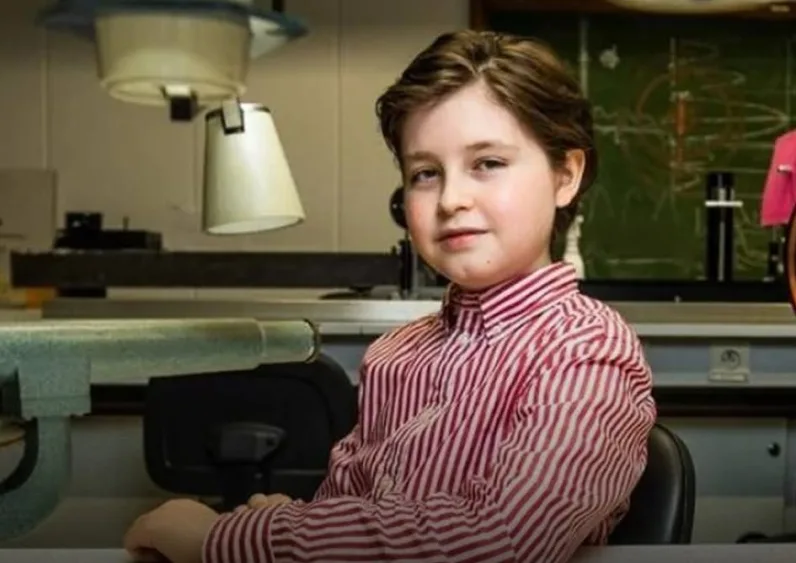
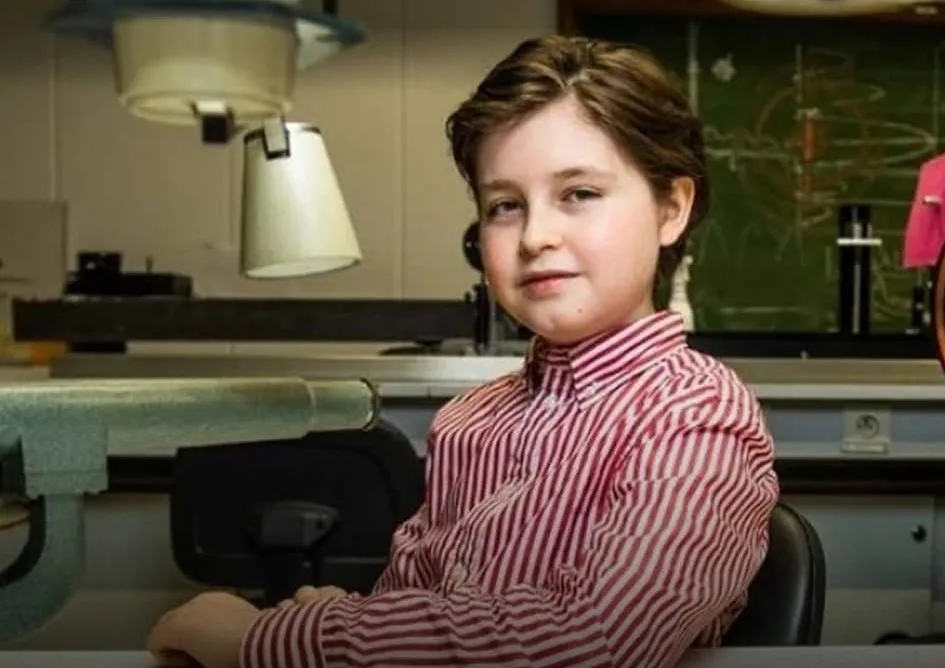
At just 15 years old, Belgian prodigy Laurent Simons has earned a PhD in quantum physics — a milestone most people don’t reach until their late twenties or thirties. His educational timeline reads like science fiction: he started primary school at four, finished by six, earned a bachelor’s, then completed a master’s in quantum physics at twelve.
While most teenagers are just starting high school, Laurent was already working on advanced concepts like bosons, black holes, and quantum field equations at the University of Antwerp. This week, he completed his doctorate, becoming one of the youngest physics PhDs in modern history. Professors describe him as having an exceptional memory and a measured IQ of about 145, placing him roughly in the top 0.1% of the population.
But what makes Laurent truly extraordinary isn’t just his speed — it’s his motivation. When he was eleven, he lost his grandparents, an event that reshaped his entire sense of purpose. Since then, he says his goal has been to extend human life, not for glory or immortality, but to give families more time together.
Big tech companies from the U.S. and China have already tried to recruit him, but his parents have turned down the offers, insisting that he should grow and mature at a healthy pace. Laurent himself now wants to pivot from quantum physics into medical science and aging research, taking the mathematical skills he mastered so early and applying them to the biology of longevity.
He’s not the youngest PhD ever — that record belongs to Karl Witte in 1814 — but in modern theoretical physics, he is in a class almost by himself. And the wildest part? At 15, he’s only just beginning to decide what kind of impact he wants to have on the world.