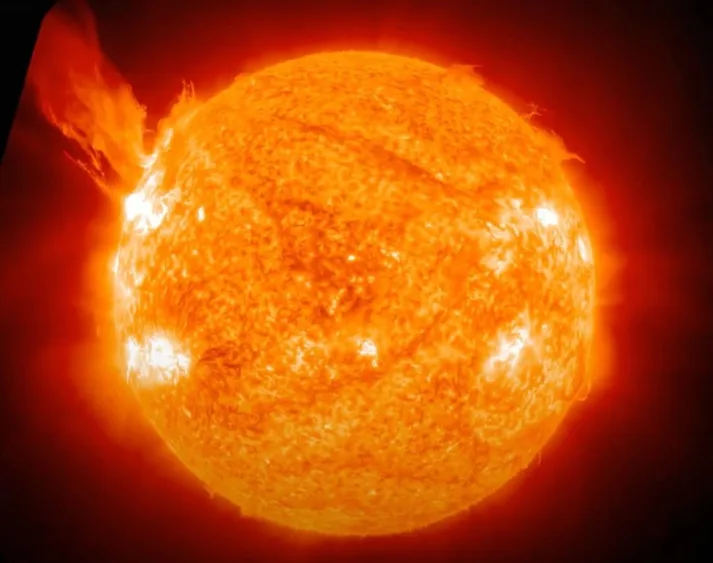
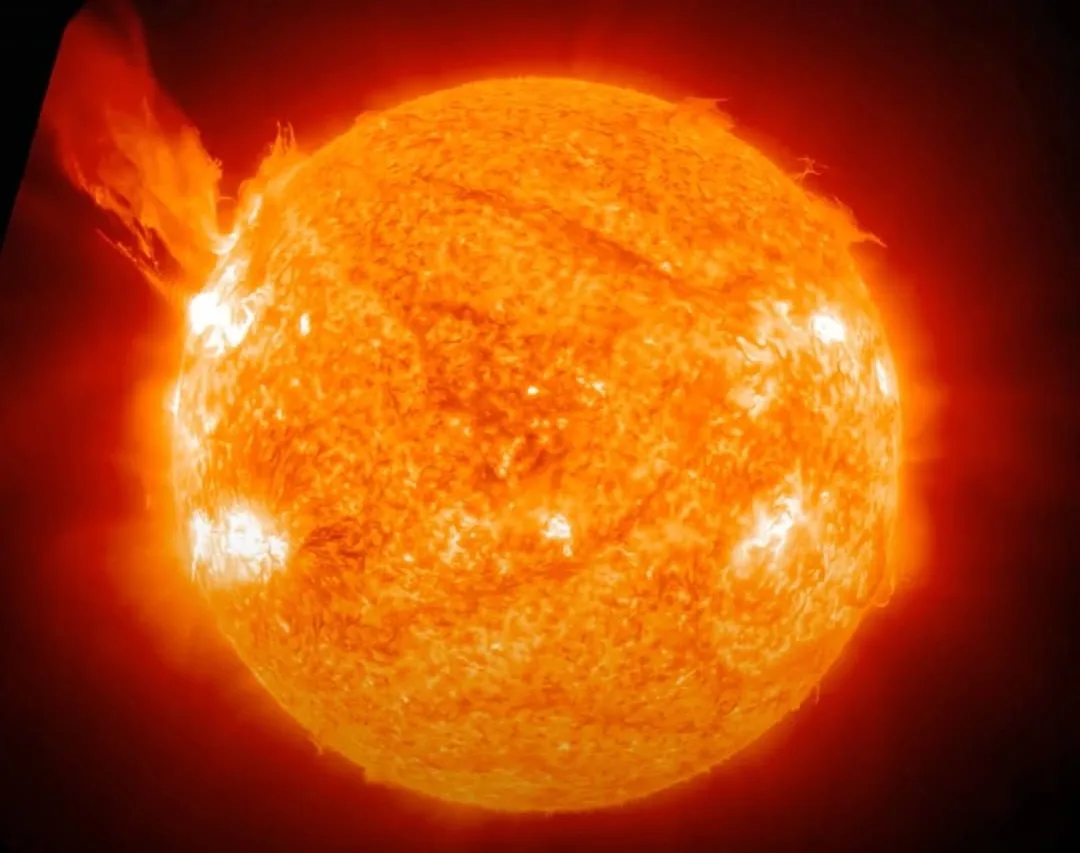
An X1.9 flare and solar wind are heading for Earth
On December 1, the Sun unleashed an X1.9-class solar flare – one of the strongest of this cycle – and a wide coronal mass ejection (CME) erupted from the blast zone.
The flare came from sunspot region AR4299, a returning giant that had already made headlines last month as AR4274. Scientists tracked it as it rotated around the far side of the Sun. Now it’s back and still firing.
This powerful X-flare peaked at 02:49 UTC and was classified as R3 (strong) on the radio blackout scale. The eruption launched a spectacular CME, though most of the energy is not Earth-directed due to the region’s current position near the Sun’s eastern limb.
But there’s more: a trans-equatorial coronal hole is now directly facing Earth. These darker regions of the solar corona emit high-speed solar wind, which is expected to hit Earth around December 3. This could lead to increased geomagnetic activity, possibly bringing auroras farther south than usual.
And don’t forget sunspot region AR4294 – another active zone with a complex magnetic structure and multiple M-class flares already.
In short: the Sun is waking up again.
None of this is cause for alarm, but space weather forecasters will be watching closely. Flares like this can disrupt communications, navigation systems, and power grids if Earth is in the path and coronal holes are known to shake up our magnetosphere.
We’re heading into solar maximum, and these kinds of events are only going to get more common.
Stay tuned. Stay sun-aware.
Learn more:
“X1.9 solar flare, Coronal hole faces Earth.” SpaceWeatherLive, 1 December 2025.